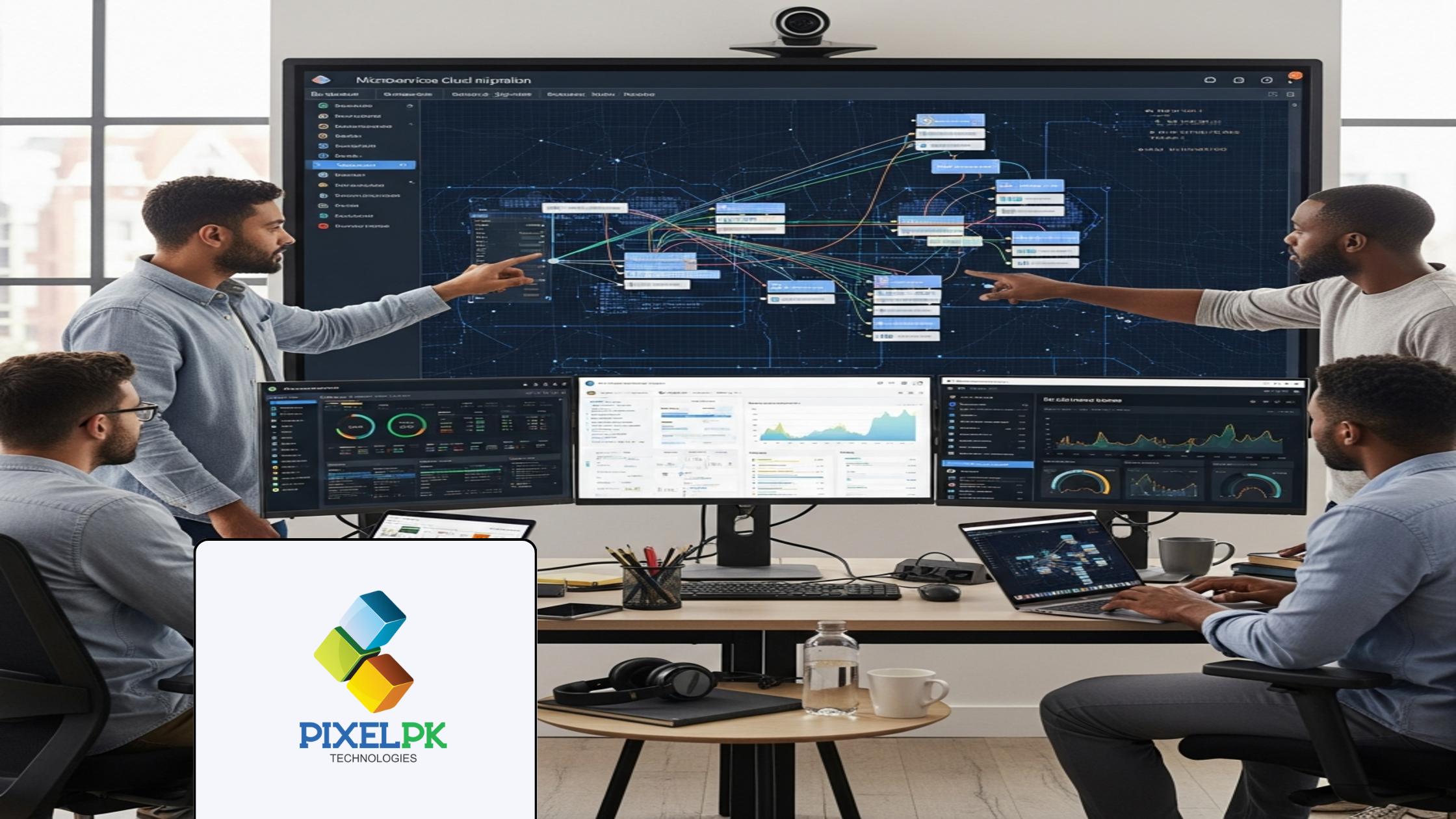




The Power of AI ML Cloud Integration
Understanding AI ML Cloud Integration is essential for modern businesses looking to scale operations and enhance efficiency. AI ML Cloud Integration enables companies to leverage cutting-edge technology without significant upfront infrastructure costs. This approach transforms data into actionable insights, driving innovation and competitive advantage.
Pixelpk Technologies specializes in seamless integration strategies. We help organizations move from proof-of-concept (POC) to full production. Our expertise ensures a robust and scalable solution for your specific needs.
What is AI ML Cloud Integration?
AI ML Cloud Integration combines Artificial Intelligence (AI) and Machine Learning (ML) capabilities with cloud computing platforms. This process involves deploying AI/ML models, data pipelines, and related services within a cloud environment. Major cloud providers like AWS, Azure, and Google Cloud offer extensive tools for this.
Consequently, businesses gain access to scalable resources and advanced analytics. This allows for faster development and deployment of intelligent applications. It also reduces operational complexities significantly.
Key Benefits for Your Business
Integrating AI and ML with cloud services offers numerous strategic advantages. These benefits contribute directly to business growth and operational excellence.
- Scalability: Easily scale computing resources up or down based on demand. This flexibility optimizes costs and performance.
- Cost-Efficiency: Pay-as-you-go models reduce capital expenditure on hardware. Therefore, operational costs become more predictable.
- Accelerated Innovation: Access to pre-built AI/ML services and powerful infrastructure speeds up development cycles. Teams can focus on model refinement, not infrastructure management.
- Enhanced Data Security: Cloud providers offer robust security features and compliance certifications. This protects sensitive data and intellectual property effectively.
- Global Reach: Deploy AI/ML applications globally with low latency. This improves user experience and market penetration across diverse regions.
Step-by-Step Guide: AI ML Cloud Integration From POC to Production
Implementing AI ML Cloud Integration requires a structured approach. This guide outlines the critical phases from initial concept to a fully operational system. Our methodology ensures a smooth and effective transition.
Phase 1: Planning and Strategy
Careful planning forms the foundation for successful integration. This initial phase defines objectives, evaluates resources, and selects the right platform.
Defining Objectives and Use Cases
First, clearly articulate your business goals. Identify specific problems that AI/ML can solve. For example, consider use cases like predictive analytics, customer service automation, or supply chain optimization.
Next, define success metrics. This ensures measurable outcomes for your AI/ML initiatives. A well-defined objective guides the entire development process.
Cloud Platform Selection
Choose a cloud provider that aligns with your technical requirements and budget. Evaluate factors such as:
- Available AI/ML services (e.g., AWS SageMaker, Azure ML, Google AI Platform)
- Data storage options and performance
- Security features and compliance standards
- Cost models and support services
- Existing infrastructure compatibility
Phase 2: Data Preparation and Model Development
High-quality data is paramount for effective AI/ML models. This phase focuses on data readiness and model creation.
Data Ingestion and Governance
Establish robust data pipelines to ingest data from various sources. These sources may include databases, APIs, and real-time streams. Implement strong data governance policies immediately.
Ensure data quality, privacy, and compliance with regulations like GDPR or HIPAA. Data cleansing, transformation, and labeling are crucial steps here. For more insights on data strategies, explore resources from industry leaders like Gartner.
Model Training and Validation
Develop and train your AI/ML models using the prepared datasets. Utilize cloud-based machine learning services for efficient training. This allows for powerful computing resources on demand.
Subsequently, rigorously validate your models. Use techniques like cross-validation and A/B testing. Ensure the models meet performance benchmarks and generalize well to new data.
Phase 3: Deployment and Integration
This phase involves migrating existing systems and deploying the trained models into the chosen cloud environment.
Cloud Migration Strategies
Plan your migration carefully. Options include lift-and-shift, re-platforming, or refactoring. The best strategy depends on your existing infrastructure and desired agility. Consider a phased migration to minimize disruption.
Ensure data integrity and application continuity throughout the migration. Pixelpk Technologies offers specialized mobile app development services that often involve seamless cloud migrations for backend systems.
API Integration and Microservices
Integrate your deployed AI/ML models into existing applications via APIs (Application Programming Interfaces). This enables seamless communication between services. Furthermore, adopt a microservices architecture where appropriate.
Microservices enhance scalability, fault isolation, and independent deployment. This modular approach simplifies updates and maintenance, improving overall system resilience.
Phase 4: Monitoring and Optimization
Post-deployment, continuous monitoring and optimization are vital for long-term success. This ensures models remain effective and resources are used efficiently.
Performance Monitoring and Retraining
Implement continuous monitoring for your AI/ML models. Track key metrics such as accuracy, latency, and resource utilization. Set up alerts for performance degradation or anomalies.
Establish a regular retraining schedule for models. Data drift can reduce model effectiveness over time. Frequent retraining with fresh data maintains optimal performance.
Measuring ROI and Business Impact
Continuously measure the Return on Investment (ROI) of your AI ML Cloud Integration. Evaluate its impact against the initially defined business objectives. This includes cost savings, revenue growth, or improved customer satisfaction.
Adjust strategies based on these measurements. This ensures ongoing value delivery and justifies future investments. Transparent reporting is crucial for stakeholders.
Overcoming Challenges in AI ML Cloud Integration
While beneficial, AI ML Cloud Integration presents certain challenges. Addressing these proactively ensures a successful implementation. We help clients navigate these complexities.
Security and Compliance Considerations
Data security is a primary concern. Ensure all cloud services comply with relevant industry standards and regulations. Implement robust access controls, encryption, and regular security audits. Utilize cloud provider security tools comprehensively.
Compliance is non-negotiable for many industries. Therefore, careful configuration and continuous monitoring are essential. Partner with experts who understand regulatory landscapes.
Scalability and Cost Management
Managing scalability and costs effectively is another challenge. Optimize resource allocation to avoid over-provisioning. Implement auto-scaling features to dynamically adjust resources. This balances performance and cost.
Regularly review cloud spending. Use cost management tools provided by cloud vendors. Furthermore, consider reserved instances for stable workloads to reduce expenses.
Frequently Asked Questions
How does AI ML Cloud Integration benefit startups?
AI ML Cloud Integration provides startups with enterprise-grade computing power and advanced tools without large upfront investments. This accelerates product development and market entry. It allows them to innovate rapidly and compete effectively with larger companies, fostering agility.
What are common challenges in AI ML Cloud Integration?
Common challenges include managing data quality and governance, ensuring data security and compliance, optimizing cloud costs, and selecting the right tools. Integrating legacy systems and finding skilled talent also pose significant hurdles. Addressing these needs careful planning.
Can existing on-premise models be moved to the cloud?
Yes, existing on-premise models can often be migrated to the cloud. This process involves re-platforming or refactoring the models and their dependencies. It leverages cloud services for deployment, scaling, and management. Proper planning is essential for a smooth transition.
How is data security handled during integration?
Data security during AI ML Cloud Integration is handled through several layers. This includes encryption at rest and in transit, robust access controls, network security configurations, and regular compliance audits. Cloud providers also offer advanced threat detection and identity management services. Organizations must configure these tools correctly.
Conclusion: Unlock Your Potential with AI ML Cloud Integration
AI ML Cloud Integration is not just a technological upgrade; it is a strategic imperative for businesses aiming for digital leadership. From enhancing operational efficiency to driving profound innovation, the benefits are clear. Successfully navigating this journey requires expertise and a methodical approach.
Pixelpk Technologies empowers businesses to harness the full potential of AI and ML in the cloud. We provide end-to-end solutions, guiding you from conceptualization to a fully optimized production environment. Our team ensures your integration is secure, scalable, and delivers tangible ROI.
Ready to transform your business with intelligent cloud solutions? Contact Pixelpk Technologies today to discuss your AI ML Cloud Integration project. Let us build your future, together.