AI SDR
Working · 24/7Does on its own
- Researches accounts and finds the decision makers
- Writes personal first emails and follow-ups
- Qualifies replies and books meetings
You decide: Your ideal customer, tone and daily limits






We build AI agent teamsdigital workerscomputer-use agentsvoice agentsself-running workflows that run your operations.
Automation today isn’t “if this, then that”. It’s teams of AI agents that read, decide and use your software — even apps with no API — to finish whole processes, while your people set the limits and handle the exceptions.
 Voice noteCustomer · Urdu
 Billing agentRefund in Stripe
 AI agentQualify & enrichHubSpotCreate deal
 SlackNotify the repInvoice emailPDF attached
 SheetsLog the row
 QuickBooksDraft the bill
Connects the tools you already use
 n8n
 Make
 ZapierOpenAI
 AnthropicHubSpot
 SalesforceSlackGmailGoogle Sheets
 Google Drive
 Google CalendarWhatsApp
 Telegram
 Shopify
 WooCommerceStripeQuickBooks
 Xero
 Notion
 Airtable
 ClickUp
 Asana
 Trello
 Zendesk
 Intercom
 MailChimp
 TypeformCalendly
 WordPress
 Webflow
 Supabase
 PostgreSQL
 DiscordLinkedIn
 Instagram
 Facebook
 X
In 2026 the unit of automation is a role, not a task. Each AI worker gets a job description, the tools it may use, limits you set — and a person it reports to.
Does on its own
You decide: Your ideal customer, tone and daily limits
Does on its own
You decide: Refund limits and when to escalate
Does on its own
You decide: Approve payments above your threshold
Does on its own
You decide: Shortlists and final decisions
Does on its own
You decide: Approve each post — or let it run
Does on its own
You decide: Which actions get done
Before we automate your business, we automate ours. These agents and workflows run Pixelpk’s products every day.
 Aivastark Automations
Aivastark — the AI agent we built and run — turns a sentence into a working automation: a question, a split on the answer, a booking or a follow-up, with a preview of what your customer sees. Switch it on and it runs on its own.
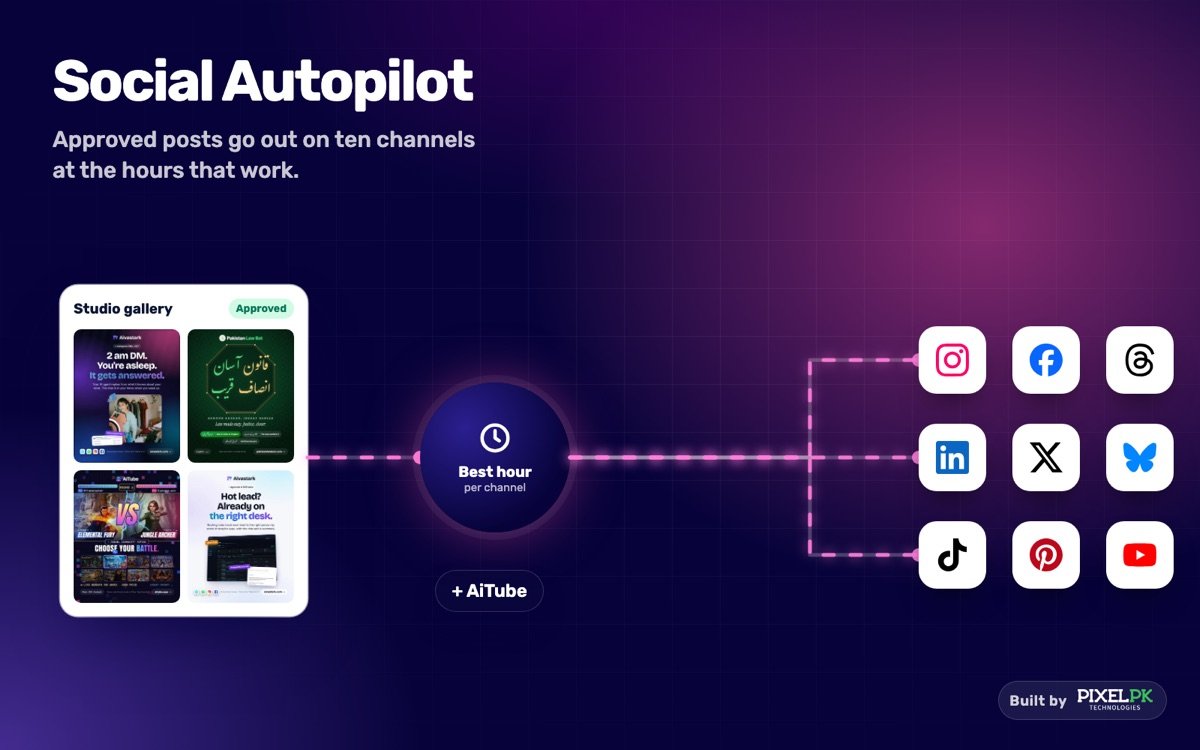
Posts what our design studio makes to Instagram, Facebook, Threads, LinkedIn, X, Bluesky, TikTok, Pinterest, YouTube and AITube — at the hours that work — then learns from the results every night.
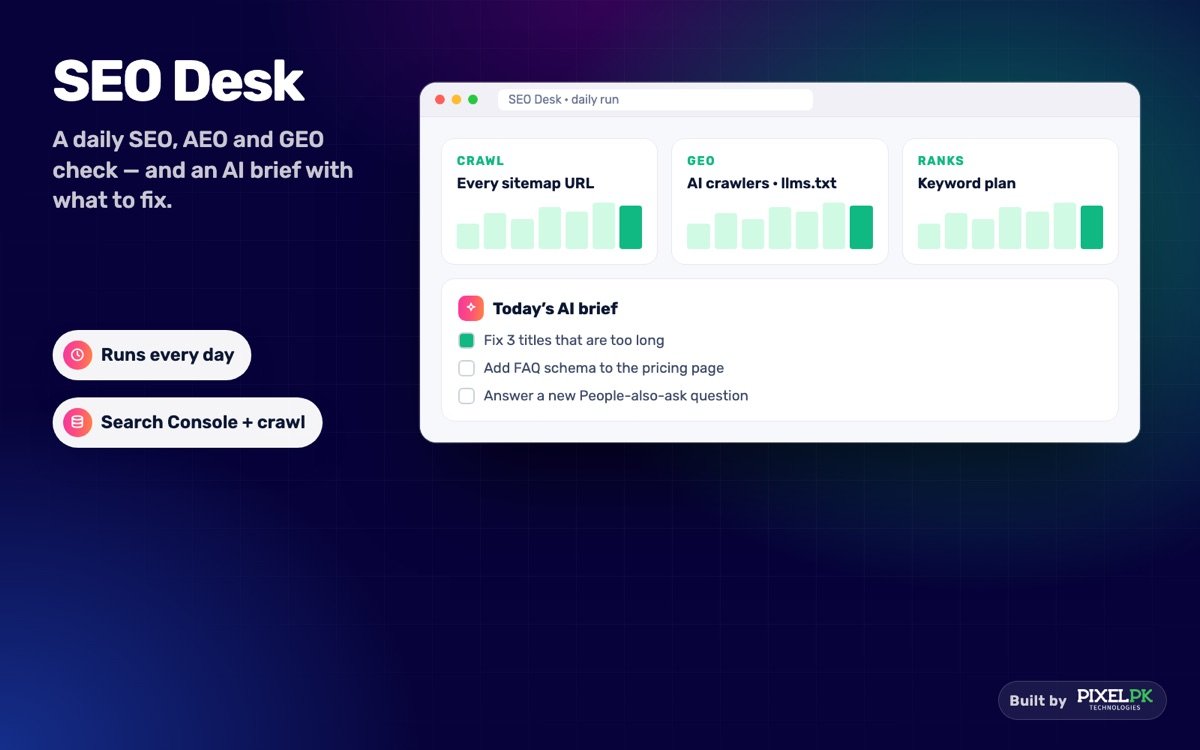
Checks aivastark.com for SEO, AEO and GEO — crawl, AI-crawler access, rankings and Search Console — then an AI writes a short brief of what to fix.
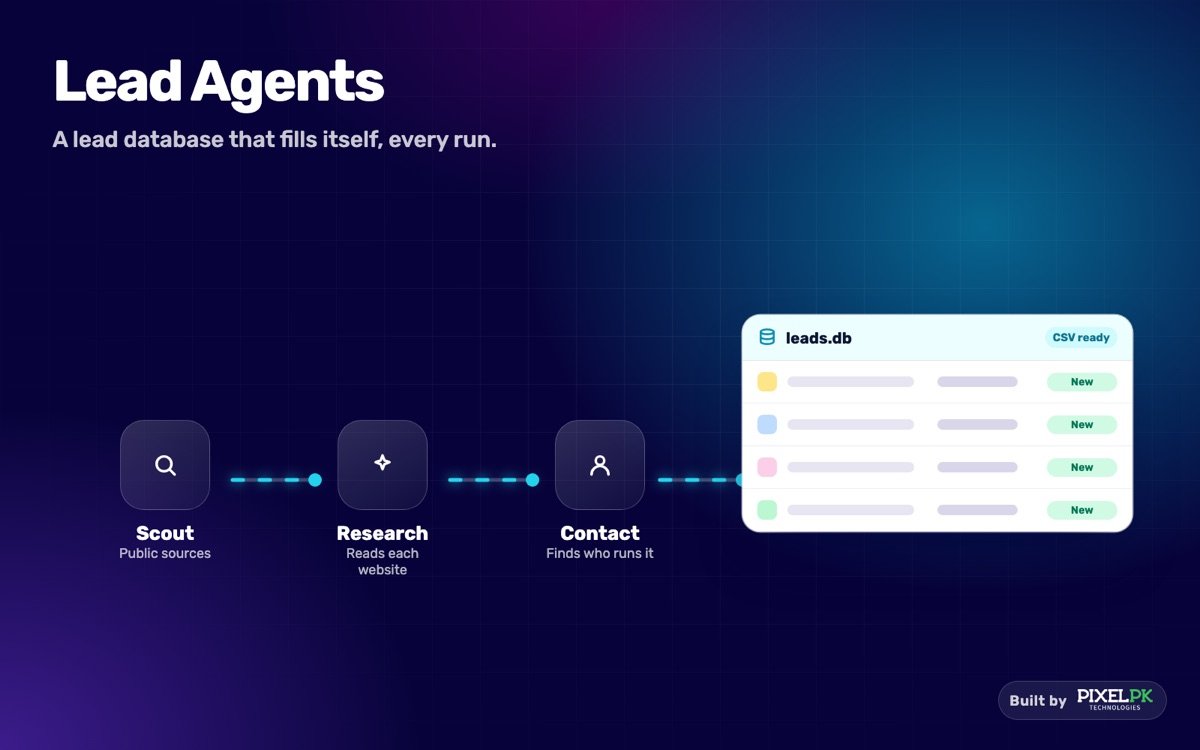
Agents that find companies from public sources, read their websites, find who runs them and save new leads, ready for outreach.
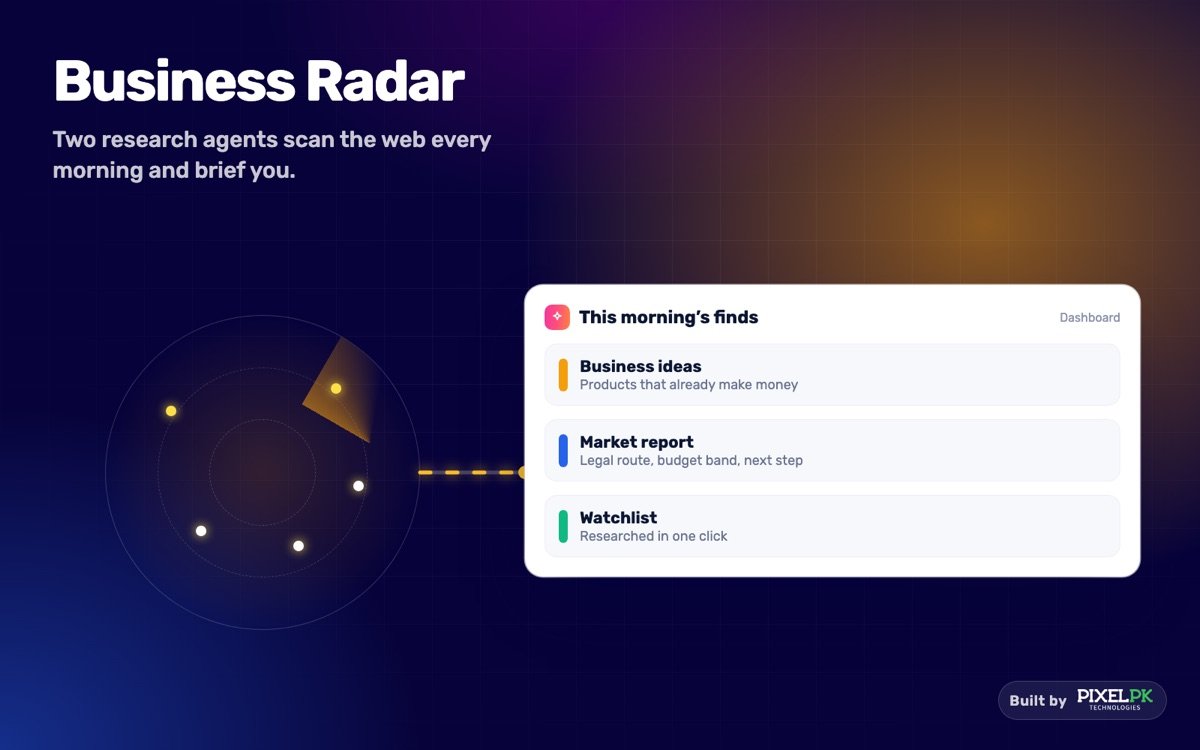
Two research agents scan launch sites, founder communities and news for opportunities, and brief us on a dashboard.
 Plus Brandiz.io — our AI content team that reads a brand, plans the content and designs the posters our Social Autopilot publishes.
brandiz.io
From one connected app to AI workforces running whole departments — built for how businesses run today.
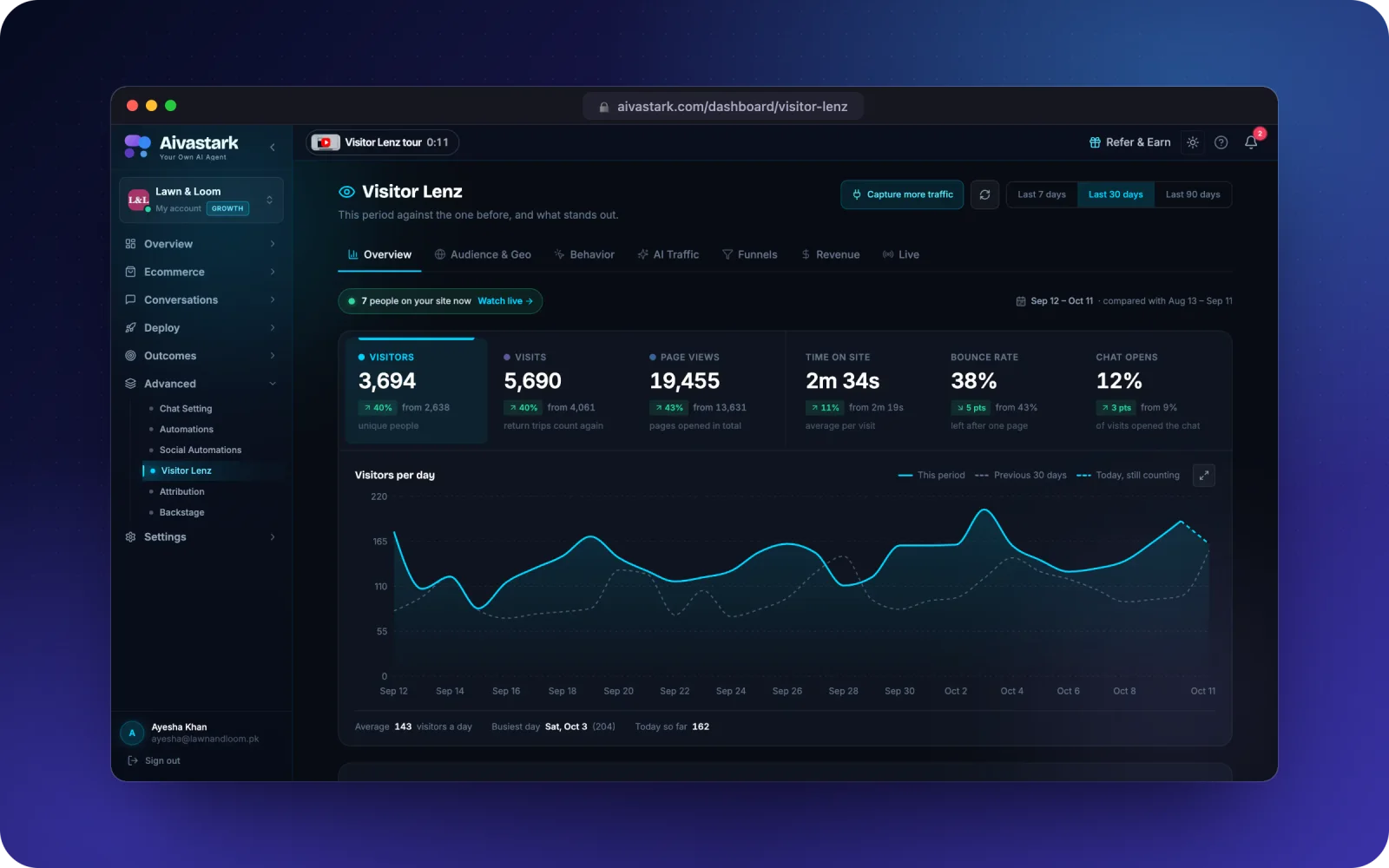 01
An orchestrator agent plans the job and hands steps to specialist agents that research, decide and act in your tools — finishing whole processes, with people on the loop for exceptions.
Plan your agent teamRole-based agents — SDR, support, finance ops, recruiting coordinator — with SOPs, limits and a human manager.
Agents that operate software like a person: legacy apps, portals and desktops that have no API.
Real-time agents on calls, voice notes and WhatsApp that understand, decide and take action — in English, Urdu and more.
We connect your CRM, ERP, data and internal tools to any AI agent through MCP — securely, with permissions.
Proven n8n, Make and Zapier workflows with AI steps — fast to build and easy for your team to own.
Invoices, receipts, contracts and reconciliations read, checked and posted — with approval above your limits.
Get your store, catalogue and APIs ready for AI shoppers and agent payments (AP2, ACP).
Agent identity, permissions, evals, tracing and cost control — so you can trust agents in production.
Under every AI worker we ship sits the same five-layer stack — built on open protocols, so you can swap models and tools without starting over.
Where people and customers meet your agents.
An orchestrator plans the job and hands steps to specialist agents. Long jobs run in the background, keep their memory and resume safely.
The right model for each step — frontier models to reason, small fast ones for routine work, private ones where data must stay.
Agents act through open standards: MCP for tools and data, A2A to work with other agents, computer use for apps with no API, and agent-payment protocols to buy.
Every agent gets an identity, permissions and limits — with evals, tracing and audit logs, and people on the loop for the exceptions.
We’re experts in the leading automation platforms — and we write code when a workflow outgrows them. You get the best fit, not the tool we happen to like.
Best for: Complex, AI-heavy workflows you want to own
Open and self-hostable, with native AI agent nodes, agent memory, RAG and code steps — the deepest agent toolkit of the three.
ExampleAI blog pipeline: trending topics → AI draft → WordPress, on your own server.
Best for: Multi-step visual workflows with branching
A visual canvas with routers and data mapping across thousands of apps, plus AI agents and an assistant that drafts scenarios from a description.
ExampleLead router: website form → AI qualifies → CRM deal + Slack alert.
Best for: Fast, simple integrations without code
The biggest app library, Zapier Agents for AI teammates, and Copilot that builds Zaps from plain language.
ExampleHR onboarding: new row in the HR sheet → emails, documents, Slack.
Best for: Agent teams and anything no-code can’t do
LangGraph, the OpenAI Agents SDK or the Claude Agent SDK, with MCP tools, background runs, tracing and dashboards — like our own SEO Desk and Lead Agents.
ExampleA support agent team that refunds in Stripe and updates a legacy ERP.
| n8n | Make | Zapier | Custom | |
|---|---|---|---|---|
| Speed to set up | ||||
| Complex logic | ||||
| AI agents | ||||
| Self-hosting | — | — | ||
| Cost at high volume |
Pick one repetitive task — data entry, follow-ups, reports, invoices — and see roughly what automating it could give back.
An estimate only, based on your inputs and 48 working weeks a year. We’ll work out the real numbers for your process in the free strategy call.
Sales, finance, HR, content and support — explore how we’ve helped businesses automate their operations.
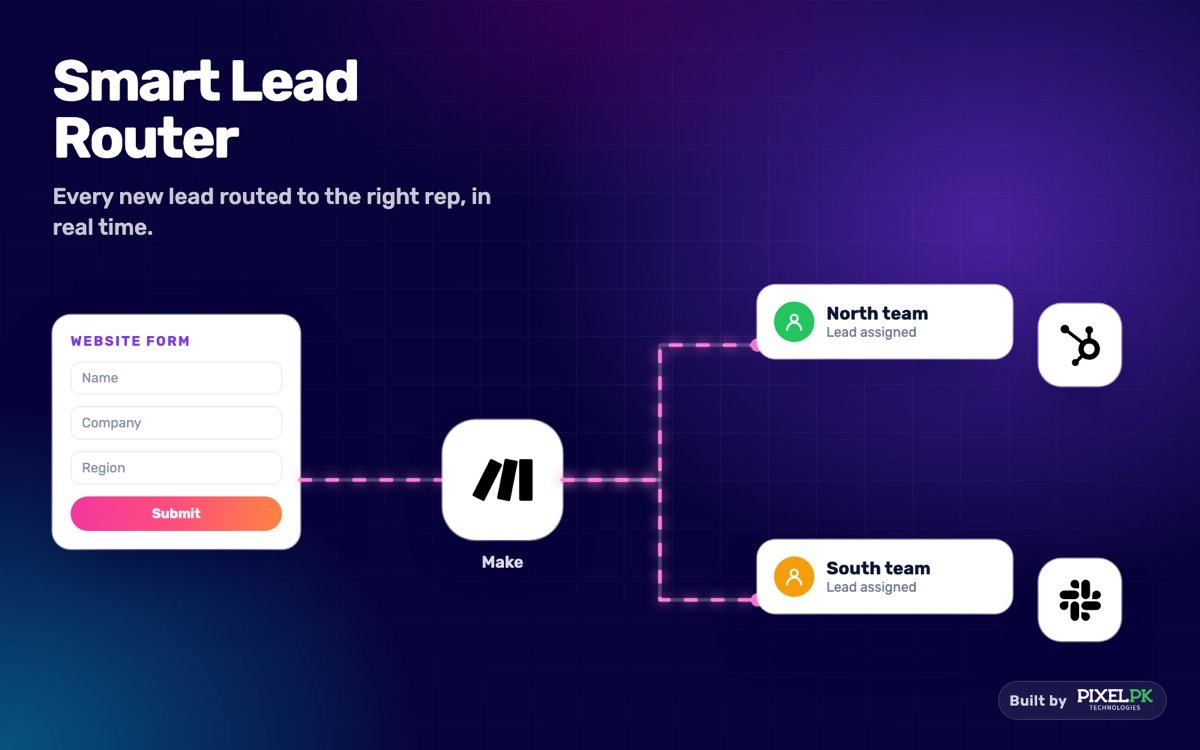
Captures new leads from website forms and routes them in real time to the right sales team by lead type and region, with CRM and Slack alerts — the rep hears about a lead in seconds, not hours.
Automate something similar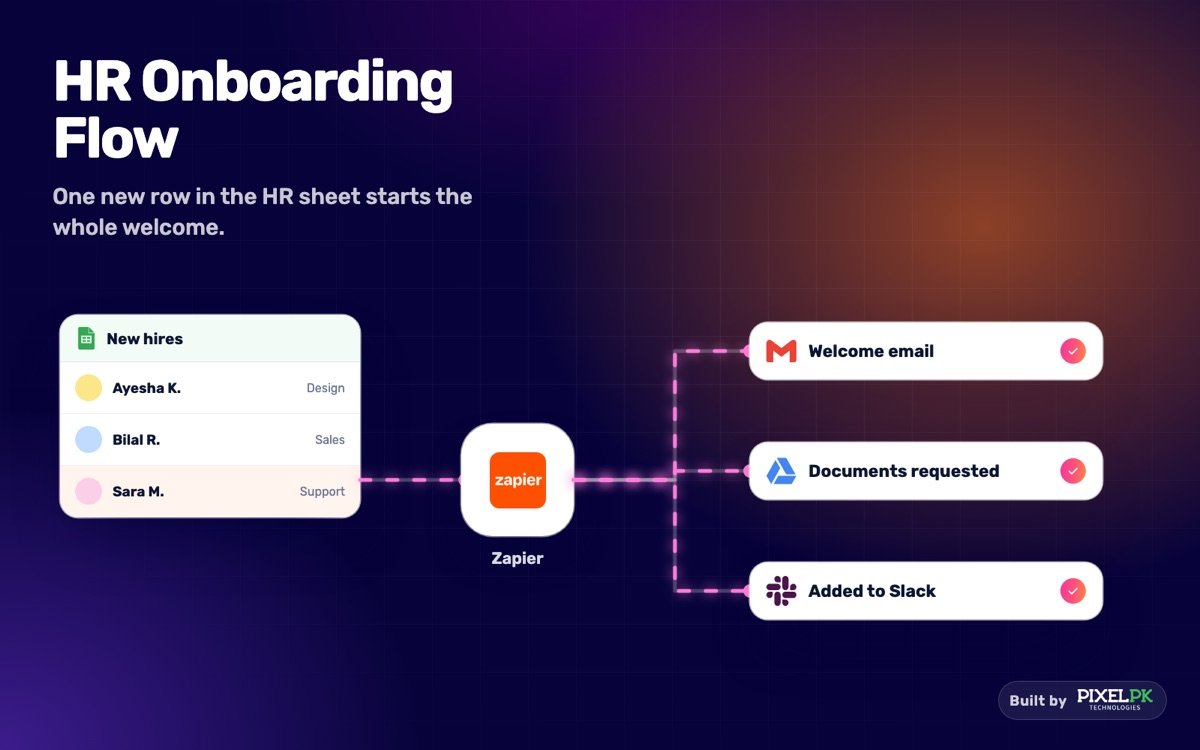
As soon as a new hire is added to the HR sheet, welcome emails, document requests and system access go out automatically — saving the HR team hours per hire.
Automate something similar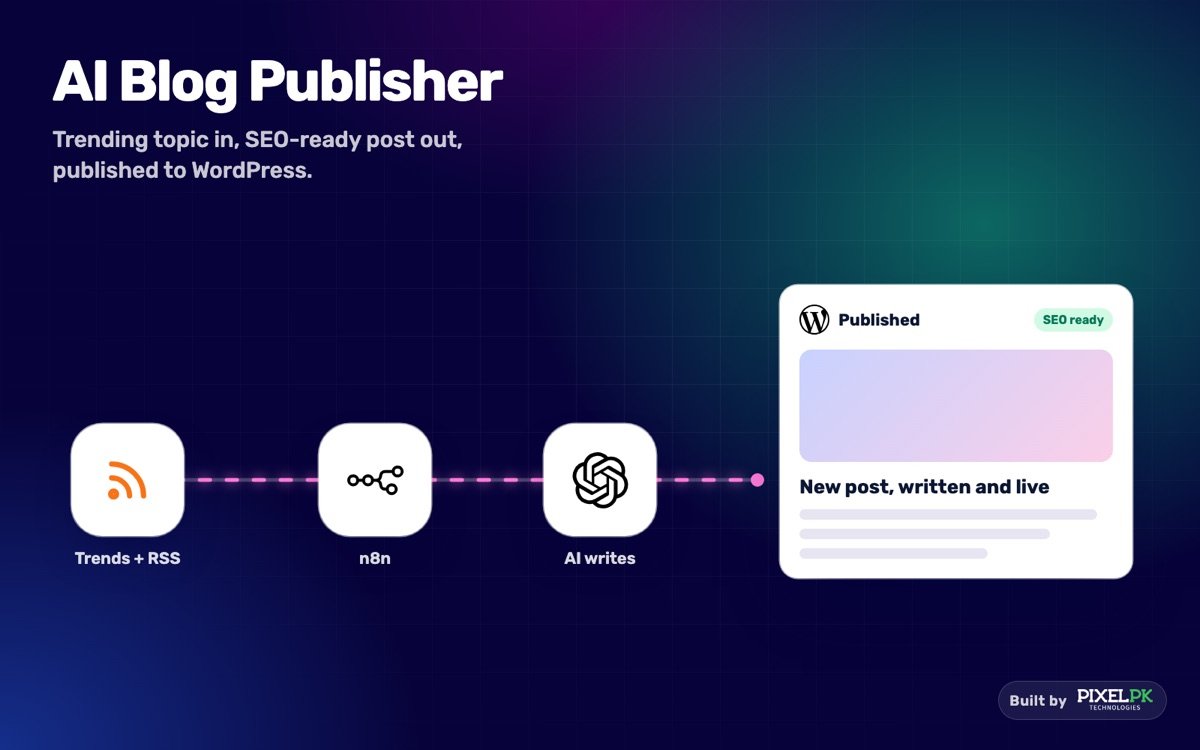
Pulls trending topics, writes SEO-optimized posts with AI, assigns categories and tags and schedules them on WordPress — a blog that stays active without manual work.
Automate something similar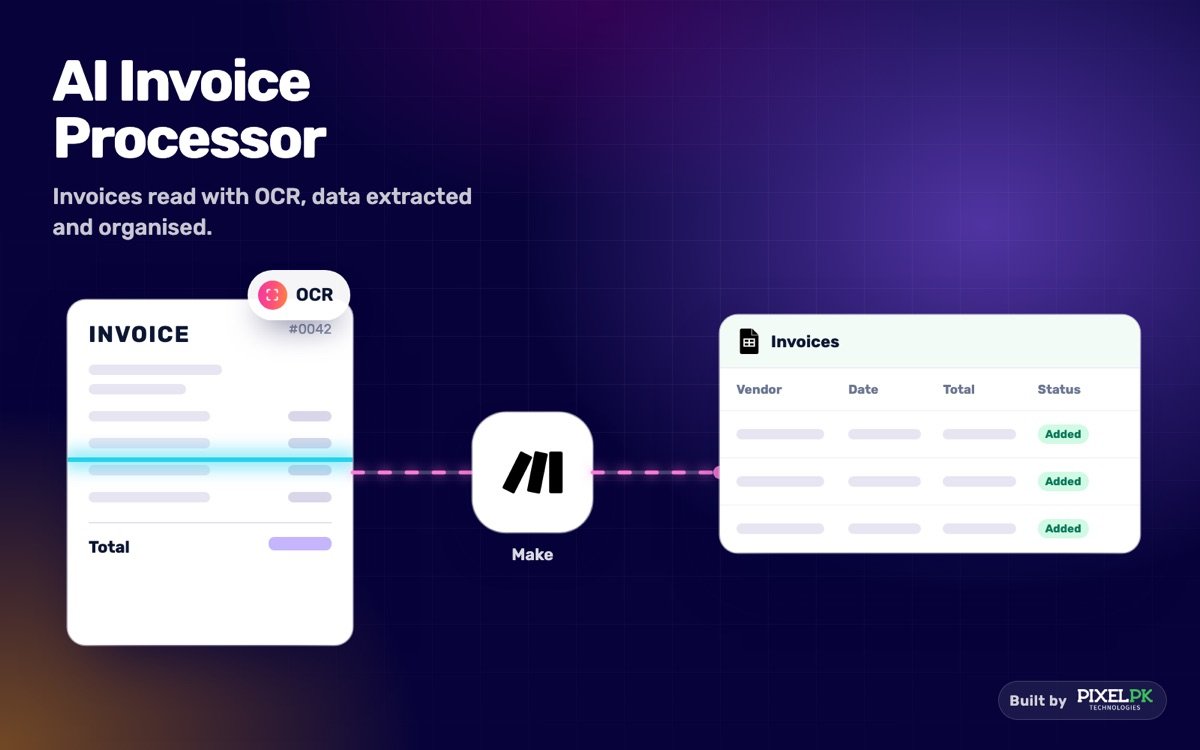
Reads incoming invoices with OCR, extracts and checks the data and organizes it automatically — no more manual data entry.
Automate something similar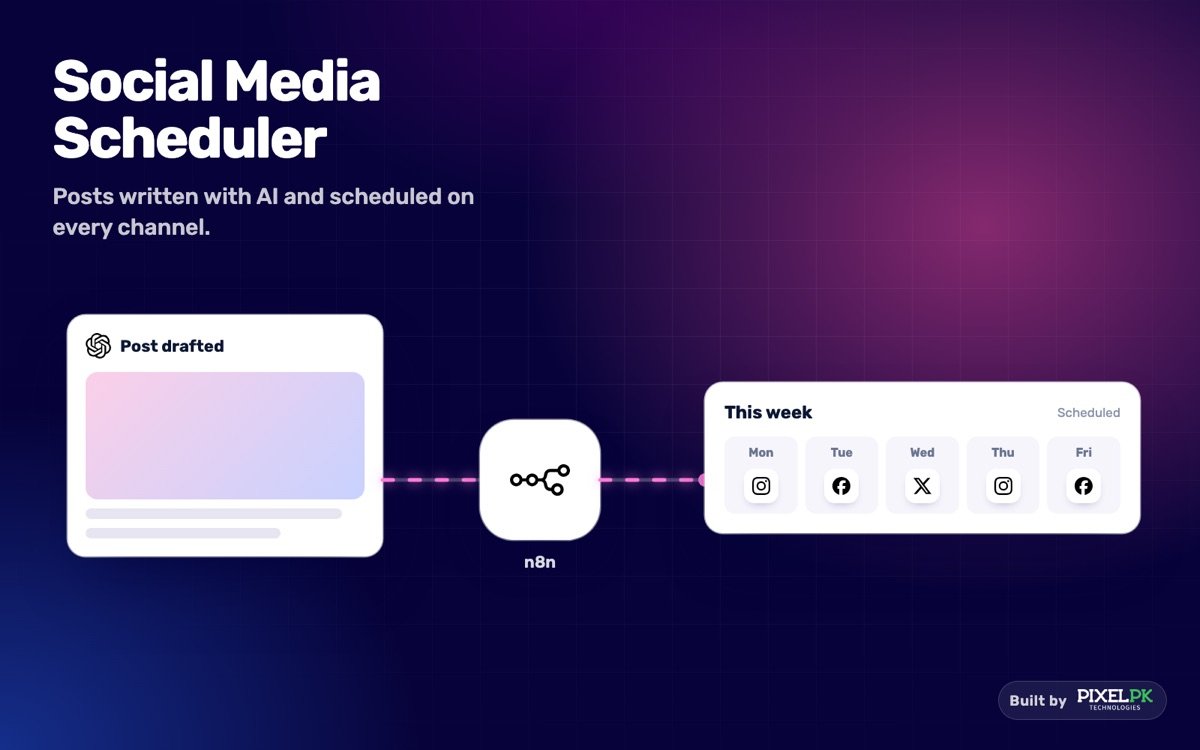
Writes posts with AI and schedules them across X, Facebook and Instagram automatically.
Automate something similar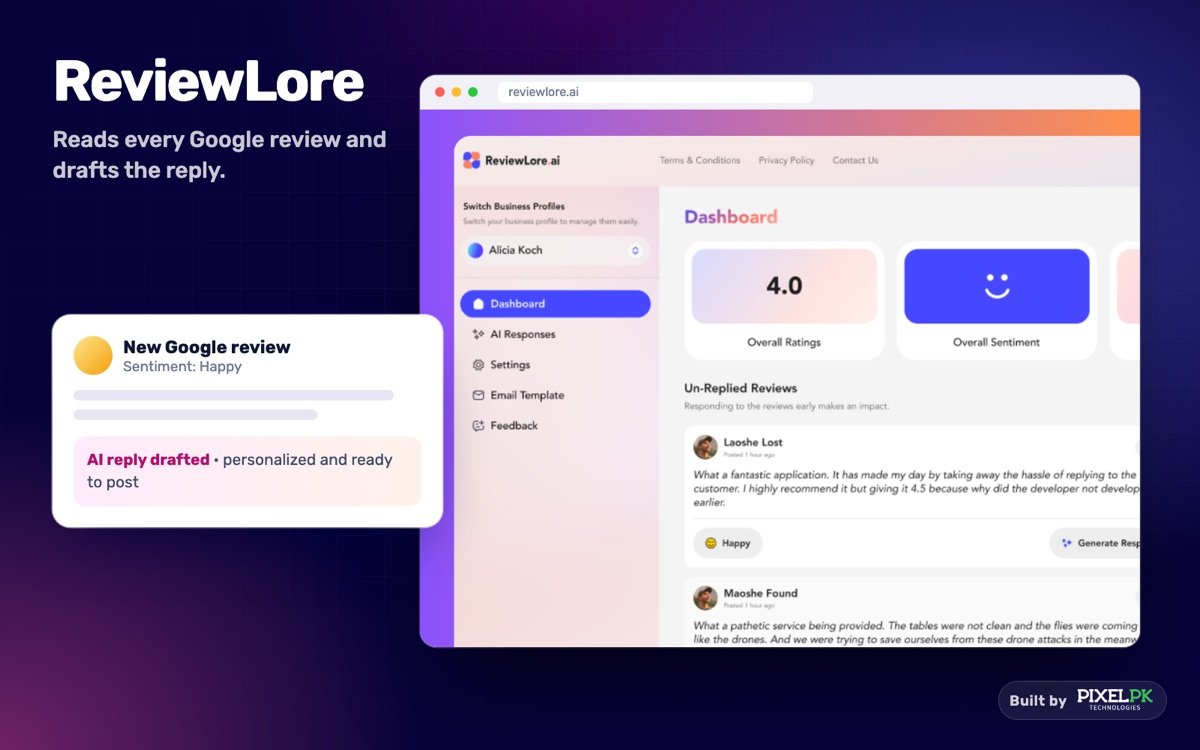
Reads every Google review for sentiment, topics and concerns, then drafts a personalized reply — reviews answered at scale.
Automate something similarTell us the task your team repeats every week — we’ll map how to automate it in a free 30-minute strategy call.
Book a Free Strategy CallAutomation has moved from “if this, then that” to AI agents that run whole processes. Here’s what’s standard now — and how we use it.
of enterprise apps will have task-specific AI agents by the end of 2026, up from under 5% in 2025.
of day-to-day work decisions will be made autonomously by agentic AI by 2028, up from 0% in 2024.
AI agents will outnumber human sellers ten to one by 2028.
of agentic AI projects will be cancelled by the end of 2027 — over cost, unclear value or weak risk controls. We build to avoid exactly that.
An orchestrator and specialist agents finish whole processes, end to end.
Agents operate software like a person — even legacy apps with no API.
One open standard to connect any agent to your tools and data.
Customers talk; agents listen, decide and act.
People set the limits and handle exceptions — not every click.
Describe it and AI drafts the workflow — Aivastark already does.
Already in production: Brandiz runs a team of 12 AI agents, Aivastark builds automations from a plain-words description, and our own agents post, research and brief us every day. We build yours the same way.
Classic automation saved minutes. Agentic automation takes whole processes off your team’s plate — and handles the messy, real-world cases too.
Agent teams take a job from start to finish instead of moving one piece of data.
Your team sets the limits and handles exceptions instead of approving every step.
Computer-use agents work where traditional integrations can’t.
Day and night, on chat, WhatsApp, email and voice.
Pay for finished work, not hours of copy-paste.
Ten times the volume, same team.
A clear, four-step approach so your agents fit the way your business really works — and stay in your control.
We map your processes, find the pain points and pick the automations with the best return.
We design the roles, tools and limits, and choose the stack — n8n, Make, Zapier or custom agents.
We build the agents, connect your tools through MCP and APIs, and test them against real cases.
We launch, trace every run, alert on anything unusual and keep upgrading models and steps.
Run a clinic, salon, shop or trade business? We set up an AI receptionist, a WhatsApp and chat agent, a social media content team and everyday automations, trained on your business.
See AI for small businessNot sure which work to hand to agents first? That’s exactly what the free strategy call is for.
Classic automation follows fixed rules — “when X happens, do Y”. AI automation adds steps that read and understand, like an email’s intent or an invoice’s fields. AI agents go further: they plan the steps, use your tools and finish the job, asking a person only when they should.
A role-based agent — for example an AI SDR, support agent or finance assistant — with a job description, the tools it may use, limits you set and a person it reports to. It works around the clock and hands exceptions to your team.
They’re open standards. MCP (Model Context Protocol) lets any AI agent use your tools and data in a controlled way; A2A (Agent2Agent) lets agents work with other agents, including other companies’. Building on them means you can switch models or vendors without starting over.
Yes. Computer-use and browser agents operate apps the way a person does — clicking, typing and reading the screen — so even legacy systems and portals can be automated, with extra checks on every step.
Yes, within limits. New protocols such as Google’s AP2 and OpenAI and Stripe’s Agentic Commerce Protocol let agents pay with spending limits and proof of your approval. We build agents — and stores — that are ready for it.
Each agent gets its own identity and only the permissions it needs, plus guardrails, evals before launch, tracing and audit logs in production, spending and action limits, and people on the loop for anything outside those limits.
Zapier is fastest for simple integrations, Make is great for visual multi-step flows, n8n suits complex, AI-heavy or self-hosted workflows, and custom agent frameworks power agent teams. We recommend after mapping your process.
Every day. Social Autopilot, SEO Desk, Lead Agents and Business Radar run Pixelpk’s own products, and Aivastark and Brandiz are AI products we built and run.
Tell us the work your team repeats every week. We’ll map which parts agents can run, what it’s worth and how to keep people in control — in a free 30-minute strategy call.