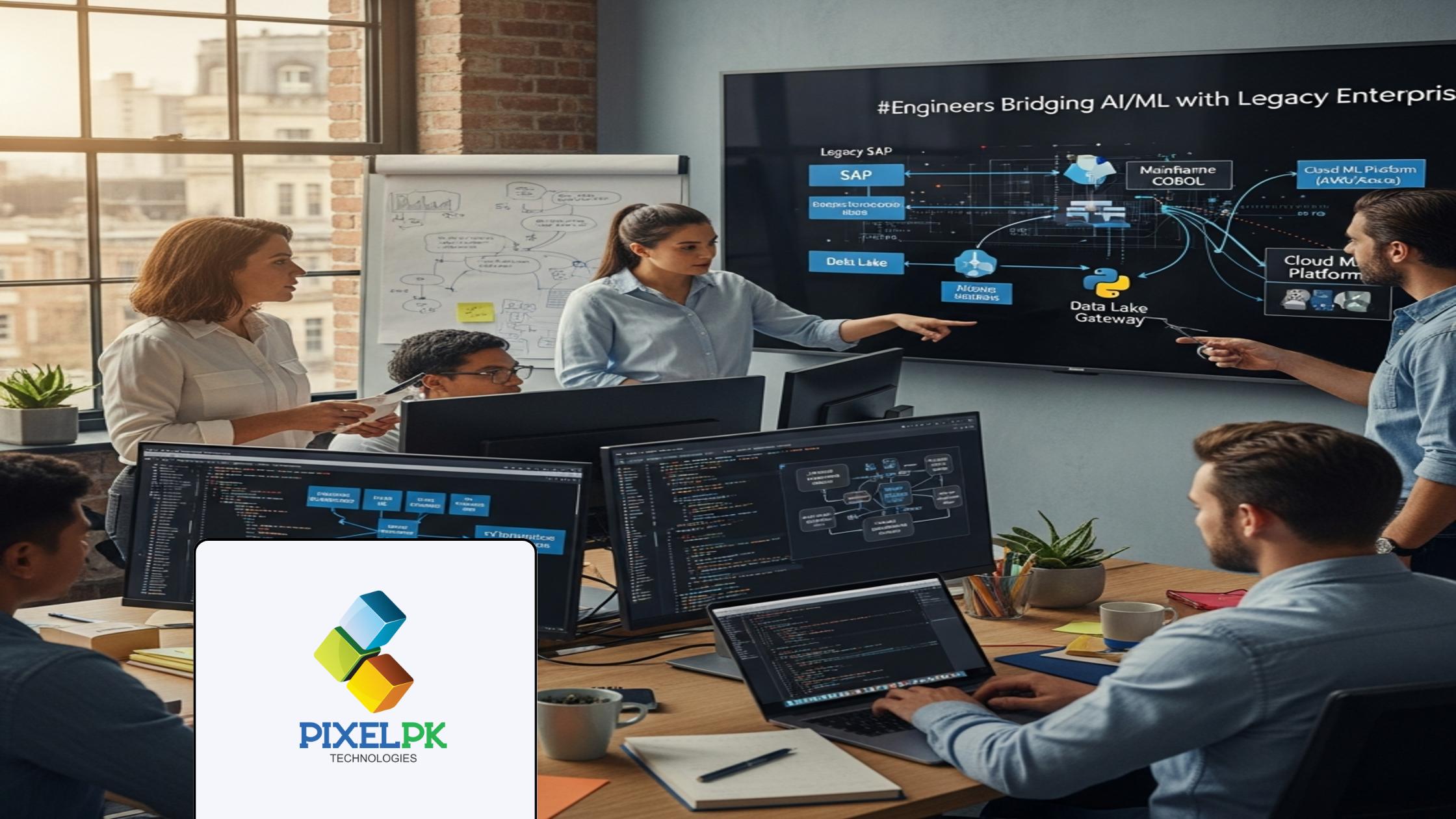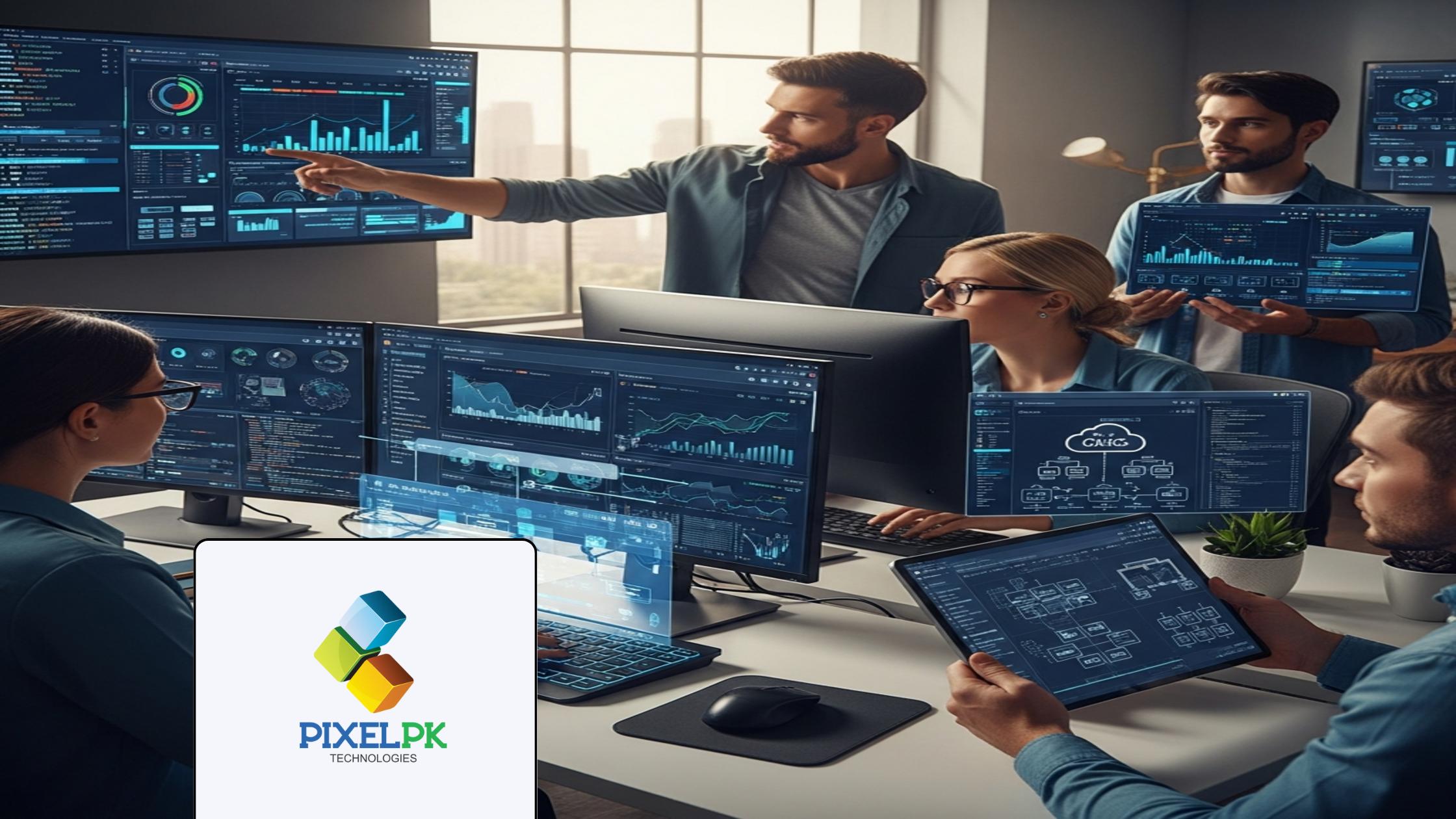



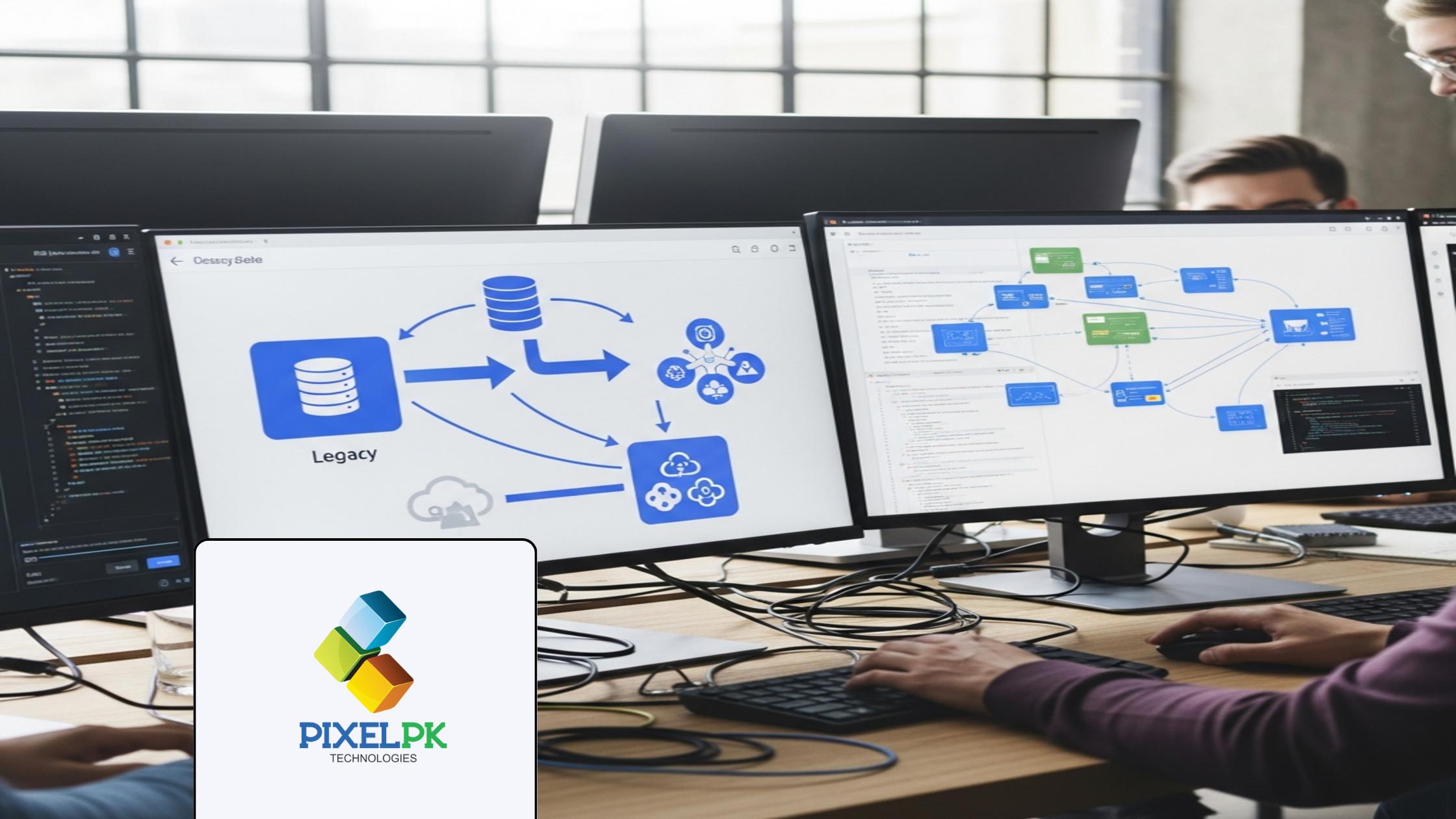
Understanding AI/ML Legacy System Integration
Understanding AI/ML Legacy System Integration is essential for modern businesses. It helps scale operations and enhance efficiency. This process enables companies to leverage cutting-edge technology. Moreover, it revitalizes existing systems without a complete overhaul.
Legacy systems often contain critical business data. However, they typically lack modern analytical capabilities. Integrating AI/ML can unlock new insights. It also automates complex tasks. Consequently, this strategic move drives significant competitive advantage.
Why AI/ML Legacy System Integration is Crucial for CTOs
CTOs face pressure to innovate. They must also manage existing infrastructure. AI/ML Legacy System Integration offers a practical path forward. It helps modernize operations effectively. Furthermore, this approach minimizes disruption and maximizes technological impact. For instance, an article from TechCrunch highlights the rapid advancements in enterprise AI adoption.
- Enhanced Decision Making: AI/ML models process vast amounts of data. They provide predictive analytics and actionable insights.
- Operational Efficiency: Automation powered by AI/ML streamlines workflows. It reduces manual errors and optimizes resource allocation.
- Cost Reduction: Modernizing parts of the system avoids costly full replacements. It extends the life of valuable legacy assets.
- Improved Customer Experience: AI-driven personalization and faster service enhance customer satisfaction. This leads to better engagement.
Challenges in AI/ML Legacy System Integration
Integrating new AI/ML technologies with older systems presents unique hurdles. Data compatibility is a primary concern. Legacy data formats are often rigid or inconsistent. Furthermore, security protocols may not align with modern AI requirements.
Technical debt also complicates the process. Older systems might have undocumented dependencies. Performance issues can arise too. Therefore, a careful strategy is vital for successful AI/ML Legacy System Integration.
Step-by-Step Guide to AI/ML Legacy System Integration
A structured approach ensures successful AI/ML Legacy System Integration. This guide provides a clear roadmap for CTOs. Following these steps helps mitigate risks and achieve desired outcomes effectively.
Phase 1: Assessment and Strategy
The initial phase involves a thorough understanding of current systems. It also defines the integration goals. This critical step sets the foundation for the entire project.
Identify Integration Goals
Clearly define what you want to achieve with AI/ML. Consider specific business problems to solve. This might include fraud detection or customer churn prediction. Furthermore, establish measurable KPIs for success.
- Define target outcomes (e.g., 15% reduction in processing time).
- Prioritize use cases with the highest business impact.
- Align AI/ML initiatives with overall business strategy.
Data Audit and Preparation
Assess your legacy data sources. Identify data quality issues, formats, and locations. Data cleansing and transformation are often necessary. This ensures data is suitable for AI/ML models. Consequently, robust data pipelines are essential.
Phase 2: Architecture and Solution Design
This phase focuses on how AI/ML will interact with your legacy environment. It involves designing the integration points and data flows. A well-designed architecture prevents future compatibility problems.
Choosing Integration Patterns
Select appropriate integration patterns. Options include API gateways, message queues, or data virtualization. The choice depends on data volume and real-time needs. For instance, microservices can wrap legacy functions. This facilitates easier AI/ML Legacy System Integration.
- API-first Approach: Expose legacy functionalities via modern APIs.
- Event-Driven Architecture: Use message brokers for asynchronous communication.
- Data Virtualization: Create a unified view of disparate data sources without moving data.
AI/ML Model Selection and Development
Determine the most suitable AI/ML models. This depends on your specific use cases. Consider factors like interpretability and performance. Develop or fine-tune models using prepared data. Ensure models are robust and scalable.
Phase 3: Implementation and Deployment
This phase involves building the actual integration points. It also includes deploying the AI/ML models. Rigorous testing is critical at every stage.
Data Pipeline Construction
Build secure and efficient data pipelines. These pipelines move data from legacy systems to AI/ML platforms. They also feed processed data back. Ensure data privacy and compliance throughout the process.
Iterative Development and Testing
Adopt an agile development methodology. Deploy integration components in small increments. Conduct extensive unit, integration, and user acceptance testing. This helps identify and fix issues early. It also ensures system stability.
Phase 4: Monitoring and Optimization
After deployment, continuous monitoring is crucial. Track model performance and system health. Use monitoring tools to detect anomalies. Regularly retrain AI/ML models with new data for optimal accuracy. Optimize integration points for better efficiency.
Implementation Strategies for Successful AI/ML Legacy System Integration
Effective strategies are key for a seamless transition. They address technical and organizational aspects. Successful AI/ML Legacy System Integration requires a holistic approach. This ensures long-term benefits and system stability.
Incremental vs. Big Bang Approaches
Decide between a phased (incremental) or a complete (big bang) rollout. Incremental approaches reduce risk. They allow for learning and adaptation. Big bang approaches can be faster but carry higher risk. Most organizations prefer incremental adoption.
Leveraging Modern Integration Technologies
Modern platforms simplify complex integrations. Cloud-native services, like AWS Glue or Azure Data Factory, streamline data movement. API management tools provide security and governance. They also accelerate development cycles. Consider these tools for your AI/ML Legacy System Integration.
Containerization via Docker and Kubernetes also offers flexibility. These technologies enable easier deployment of AI/ML services. They ensure portability across different environments. This makes scaling solutions more manageable.
Data Governance and Security
Robust data governance policies are non-negotiable. Define data ownership, access controls, and compliance requirements. Implement strong encryption for data in transit and at rest. Security audits must be regular. This protects sensitive information within the integrated environment. Adhering to best practices, such as those outlined by IBM’s guide on Data Governance, is essential.
Realizing Value: Cost Estimates and ROI of AI/ML Legacy System Integration
Understanding the financial implications is vital for stakeholders. This includes both the costs involved and the potential returns. A clear ROI calculation justifies the investment in AI/ML Legacy System Integration.
Estimating Integration Costs
Costs vary widely based on project complexity. Key factors include data volume, system age, and desired AI capabilities. Consider infrastructure, software licenses, and development effort. Furthermore, don’t forget ongoing maintenance and training costs.
- Development & Implementation: Engineering hours, platform setup.
- Data Preparation: Cleansing, migration, pipeline construction.
- Infrastructure: Cloud resources, on-premise hardware.
- Licensing: AI/ML tools, third-party connectors.
- Maintenance & Training: Ongoing support, model retraining.
Calculating Return on Investment (ROI)
Quantify the benefits to calculate ROI. These benefits often include efficiency gains, cost savings, and new revenue streams. For example, predictive maintenance reduces downtime. Automated customer service lowers operational expenses. Clearly articulate these financial impacts.
ROI can be substantial. It comes from improved decision-making and reduced manual effort. Furthermore, enhanced customer experiences drive loyalty and sales. Measure ROI against initial investment to demonstrate success.
Frequently Asked Questions
Addressing common questions helps stakeholders understand the process. These insights provide clarity for planning and execution. They also manage expectations effectively.
What are the common pitfalls in AI/ML Legacy System Integration?
Common pitfalls include poor data quality and insufficient data preparation. Lack of clear goals is another issue. Ignoring security and compliance also creates problems. Inadequate testing can lead to system failures. Proper planning mitigates these risks.
How long does an AI/ML Legacy System Integration project typically take?
Project timelines vary greatly. Small-scale integrations might take 3-6 months. Larger, more complex projects can extend to 12-18 months. Factors like system complexity and data volume influence duration. A detailed assessment provides a more accurate estimate.
What kind of team is needed for AI/ML Legacy System Integration?
A successful team typically includes data scientists, ML engineers, and software architects. Legacy system experts are also crucial. Project managers and QA specialists complete the core team. Collaboration across these roles is essential for success.
Which AI/ML technologies are best for legacy systems?
The best technologies depend on the specific use case. For structured data, traditional ML algorithms like regression or classification work well. Deep learning models suit unstructured data, like text or images. Cloud AI services often provide pre-built models and scalable infrastructure, simplifying integration.
Conclusion
AI/ML Legacy System Integration is a transformative step for any enterprise. It unlocks new capabilities from existing infrastructure. It also drives significant operational and strategic advantages. Embracing this integration strategy positions your business for future growth.
The journey requires careful planning, robust execution, and continuous optimization. Pixelpk Technologies specializes in navigating these complexities. We deliver tailored AI/ML solutions that integrate seamlessly with your legacy systems.
Ready to modernize your operations and harness the power of AI/ML? Connect with Pixelpk Technologies today to discuss your AI/ML Legacy System Integration needs and explore how we can help you achieve your digital transformation goals. Additionally, you can explore our mobile app development services for modernizing front-end experiences.