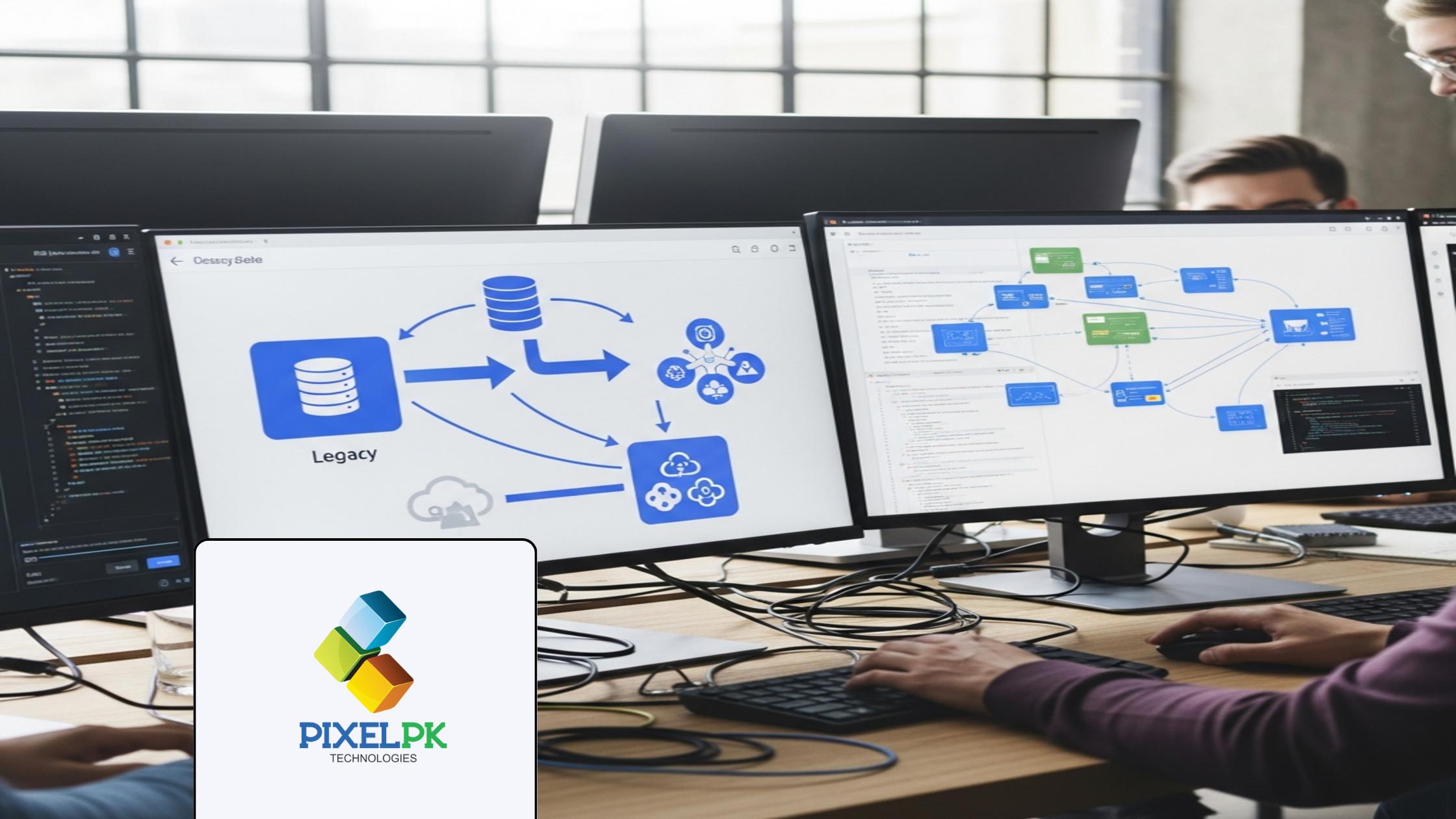




Unleashing Business Agility with Cloud Microservices Migration
Understanding Cloud Microservices Migration is essential for modern businesses seeking to scale operations and enhance efficiency. This strategic shift transforms legacy systems into agile, cloud-native architectures. It allows companies to leverage cutting-edge technology for greater flexibility.
Many organizations face challenges with monolithic applications. These large, tightly coupled systems can hinder innovation. Cloud Microservices Migration provides a powerful solution, breaking down complex applications into smaller, manageable services.
Understanding Cloud Microservices Migration
Microservices architecture is a development style. It structures an application as a collection of loosely coupled services. Each service performs a specific business function. They communicate through lightweight mechanisms, often APIs.
In contrast, a monolithic application is a single, indivisible unit. All components are packaged together. Any change requires redeploying the entire application. This can slow down development and deployment processes significantly.
The Advantages of Cloud Microservices Migration
Businesses adopt Cloud Microservices Migration for several reasons. Primarily, it boosts organizational agility. Teams can develop, deploy, and scale services independently. This accelerates time-to-market for new features and updates.
Furthermore, this approach enhances fault isolation. If one service fails, others remain operational. This improves overall system resilience. It ensures continuous availability for critical business functions.
Strategic Benefits of Effective Cloud Microservices Migration
Implementing Cloud Microservices Migration offers significant strategic advantages. It impacts various aspects of business operations and technology management. These benefits contribute to long-term growth and competitive edge.
Enhanced Scalability and Reliability
Microservices allow independent scaling. You can scale specific services based on demand. This optimizes resource usage compared to scaling an entire monolith. This flexibility is crucial for handling variable loads efficiently.
Moreover, microservices improve fault tolerance. A failure in one service does not cascade. Other services continue functioning normally. This design leads to more robust and reliable applications.
Faster Innovation and Deployment Cycles
Agile development teams thrive with microservices. Each team focuses on a single service. This fosters faster development and iteration. It empowers teams to innovate without impacting others.
Continuous Integration and Continuous Delivery (CI/CD) pipelines become more efficient. Small, independent deployments reduce risk. This enables frequent releases. Consequently, businesses can respond to market changes more swiftly.
Optimized Resource Utilization and Cost Efficiency
Cloud environments offer pay-as-you-go models. With microservices, you only pay for resources specific to each service. This prevents over-provisioning. It significantly reduces infrastructure costs over time.
Resource allocation becomes highly efficient. Unused resources are minimized. This optimization translates directly into cost savings. Furthermore, it allows for better budget control and forecasting.
Your Step-by-Step Guide to Cloud Microservices Migration
A successful Cloud Microservices Migration requires careful planning and execution. Following a structured approach minimizes risks. It also ensures a smooth transition to a cloud-native environment.
Phase 1: Comprehensive Assessment and Strategy Definition
Begin by evaluating your existing legacy systems. Identify monolithic components and their dependencies. Define clear migration objectives and success metrics. This initial analysis forms the blueprint for your Cloud Microservices Migration.
Consider business goals and desired outcomes. Prioritize which parts of the system to migrate first. Develop a detailed roadmap outlining each stage of the process.
Phase 2: Modern Architecture Design and Technology Stack Selection
Choose your preferred cloud provider, such as AWS, Azure, or GCP. Select appropriate technologies for your microservices. This includes programming languages, databases, and communication protocols.
Design your microservice boundaries carefully. Each service should have a clear, single responsibility. This phase is critical for the long-term maintainability and scalability of your new architecture.
Phase 3: Incremental Refactoring with the Strangler Fig Pattern
Employ the Strangler Fig Pattern for migration. This involves gradually replacing monolithic functionalities with new microservices. The old system remains operational while new services are built around it.
This phased approach minimizes disruption to business operations. It allows for controlled deployment of new components. The legacy system is ‘strangled’ over time, eventually being replaced entirely.
Phase 4: Robust Testing, Deployment, and Monitoring
Implement automated testing at every stage. This ensures the quality and functionality of each new microservice. Establish robust CI/CD pipelines for efficient deployments.
Crucially, implement comprehensive monitoring and observability tools. These tools track service performance, logs, and traces. They help identify and resolve issues quickly in the new distributed environment.
Phase 5: Continuous Optimization and AI Integration
After migration, focus on continuous optimization. Fine-tune your microservices for peak performance and cost efficiency. Review and refine your architecture regularly.
Consider leveraging AI-driven solutions for further enhancements. AI can optimize resource allocation and predict potential failures. It plays a significant role in modern Cloud Microservices Migration strategies.
AI-Driven Optimization for Cloud Microservices Migration
Artificial intelligence (AI) can significantly enhance Cloud Microservices Migration. AI tools automate complex tasks. They provide insights for better decision-making throughout the process.
For example, AI can optimize resource allocation dynamically. It analyzes usage patterns to scale services up or down automatically. This ensures efficiency and cost savings. AI also helps with anomaly detection, identifying potential issues before they impact users.
Realizing Measurable ROI from Cloud Microservices Migration
Measuring the Return on Investment (ROI) from Cloud Microservices Migration is crucial. It demonstrates the tangible benefits to the business. Key performance indicators (KPIs) help track success and value creation.
Look at metrics like reduced operational costs and faster time-to-market. Evaluate improvements in system reliability and developer productivity. A well-executed Cloud Microservices Migration delivers substantial long-term value, enhancing business agility and competitiveness.
Frequently Asked Questions About Cloud Microservices Migration
What are the initial steps for a Cloud Microservices Migration?
The initial steps involve a thorough assessment of your existing monolithic application. Define clear business goals for the migration. Then, identify the boundaries for your new microservices. This planning phase is foundational for success.
How do you manage data during a Cloud Microservices Migration?
Data management is critical. Each microservice should ideally own its data store. This ensures independence. Strategies like data replication, data synchronization, and eventual consistency are often employed during the migration to handle distributed data effectively.
What are the common pitfalls in Cloud Microservices Migration projects?
Common pitfalls include incorrect service decomposition, neglecting operational complexity, and insufficient testing. Poor communication between teams and inadequate monitoring can also hinder success. Proper planning and expert guidance help avoid these issues.
Why is a phased approach recommended for Cloud Microservices Migration?
A phased approach, like the Strangler Fig Pattern, minimizes risk. It allows you to gradually replace parts of the monolith. This ensures continuous operation and reduces the impact of potential errors. It also provides opportunities to learn and adjust along the way.
Conclusion
Cloud Microservices Migration offers a transformative path for businesses seeking greater agility and innovation. It breaks down complex systems into manageable, scalable components. This approach significantly improves scalability, accelerates development cycles, and optimizes costs, leading to a more resilient and responsive digital infrastructure.
Embracing a microservices architecture positions your business for future growth. It allows for rapid adaptation to market demands. This strategic investment delivers measurable ROI and long-term competitive advantages in the digital landscape.
Developing robust, scalable microservices requires the right technology partner. Pixelpk Technologies delivers agile, scalable solutions tailored to your unique needs. Visit Pixelpk Technologies to explore our expertise and begin your transformation journey today. You can also explore our mobile app development services for modern, integrated solutions.