


Accelerating AI Value: A Practical 90-Day Roadmap for MLOps Business
Understanding MLOps Business is essential for modern businesses looking to scale operations and enhance efficiency. This approach enables companies to leverage cutting-edge AI technology effectively. It transforms how machine learning models move from development to production.
Implementing a robust MLOps framework offers a clear path to measurable ROI. It ensures your AI investments deliver tangible results. This guide provides a practical 90-day roadmap for successful MLOps adoption.
What is MLOps and Why it Matters for Your MLOps Business Success?
MLOps combines Machine Learning, DevOps, and Data Engineering principles. It creates a streamlined, automated process for managing the ML lifecycle. This includes data preparation, model training, deployment, and monitoring.
For any MLOps Business, it ensures reliability, scalability, and governance. It moves AI projects beyond experimentation into impactful, production-ready solutions. This framework prevents common pitfalls in AI development.
Bridging the Gap: Development to Production
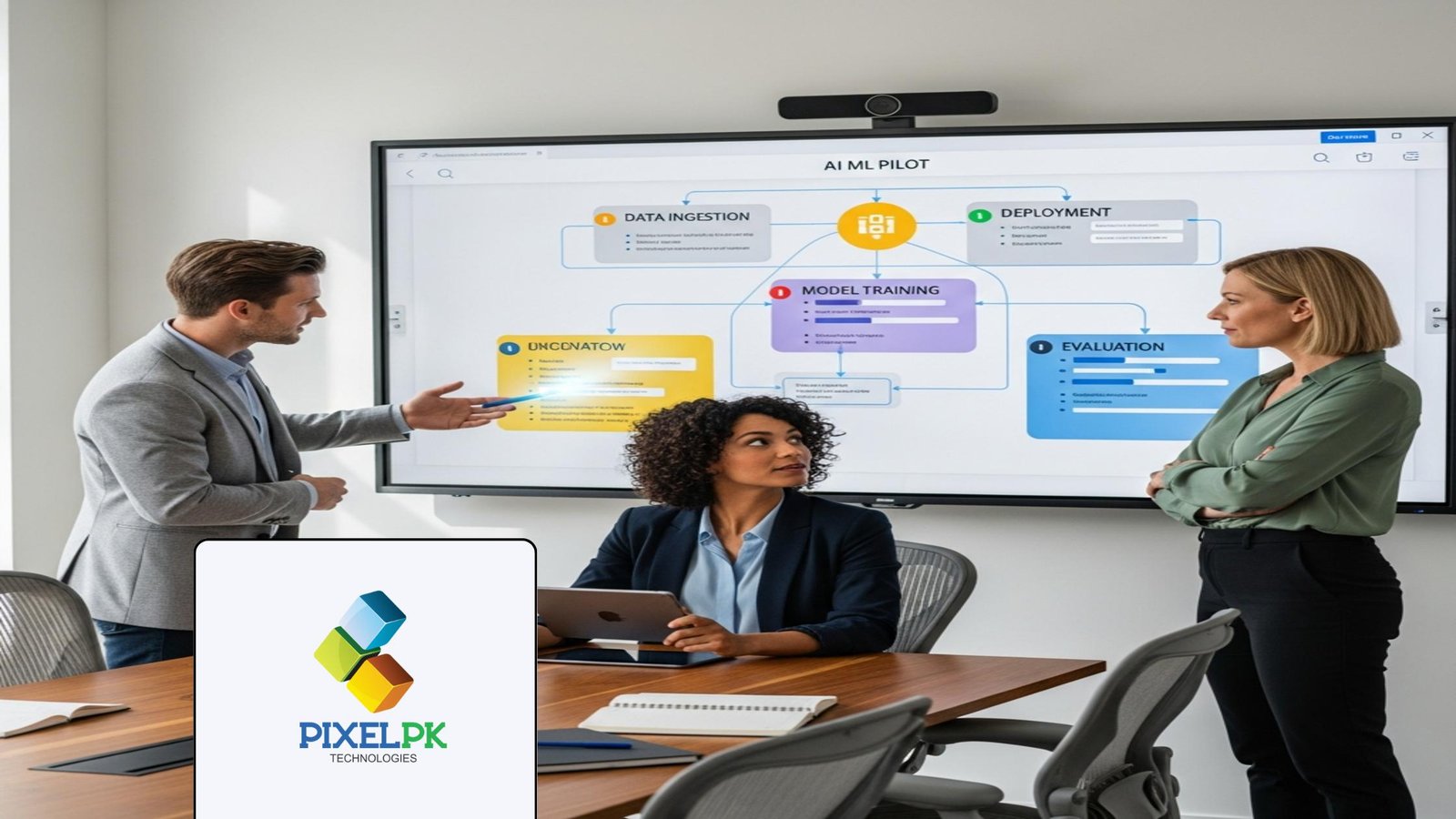
Traditional ML development often creates a disconnect between data scientists and operations teams. MLOps bridges this gap. It provides a shared set of tools and practices. This ensures seamless collaboration and faster deployments.
- Standardized Workflows: Ensures consistency across projects.
- Automation: Reduces manual errors and speeds up processes.
- Reproducibility: Guarantees consistent model behavior.
The Strategic Advantages of MLOps Business
Adopting MLOps brings significant strategic advantages. It allows businesses to maximize their AI investments. Companies gain a competitive edge through efficient and reliable AI systems.
Enhanced Collaboration and Efficiency
MLOps fosters a culture of collaboration. Data scientists, engineers, and operations teams work together effectively. This unified approach streamlines the entire development cycle.
- Shared Tools: Teams use common platforms and methodologies.
- Clear Communication: Improved understanding of roles and responsibilities.
- Accelerated Iteration: Quick feedback loops for model improvements.
Improved Model Performance and Reliability
Consistent monitoring and automated retraining are core MLOps components. They ensure models maintain high performance over time. This proactive approach prevents model decay and performance drops.
- Continuous Monitoring: Tracks model accuracy and data drift.
- Automated Updates: Retrains models with fresh data.
- Error Reduction: Identifies and resolves issues quickly.
Faster Time-to-Market for AI Solutions
Streamlined deployment pipelines significantly reduce release cycles. Businesses can introduce new AI features and products more rapidly. This speed is crucial in today’s fast-paced digital economy.
- Automated Deployment: Quickly moves models to production.
- Reduced Bottlenecks: Eliminates manual handoffs and delays.
- Competitive Advantage: Faster innovation leads to market leadership.
A 90-Day MLOps Business Implementation Roadmap
This practical roadmap outlines key steps for deploying, monitoring, and scaling production AI within 90 days. It focuses on achieving tangible results quickly. Each phase builds upon the last.
Phase 1: Foundation and Planning (Days 1-30)
The initial phase focuses on strategic alignment and infrastructure assessment. It lays the groundwork for a successful MLOps implementation. Clear objectives guide all subsequent actions.
Define Clear Objectives
First, identify specific business problems AI will solve. Establish measurable KPIs for your MLOps initiatives. This ensures alignment with overall business goals.
- Identify target use cases.
- Set performance metrics (e.g., accuracy, latency).
- Quantify expected business impact (e.g., cost savings, revenue increase).
Assess Current Infrastructure and Tools
Next, evaluate your existing data infrastructure, ML platforms, and DevOps tools. Determine what can be leveraged and what needs to be acquired or developed. This assessment identifies gaps.
- Review data storage and processing capabilities.
- Examine current model development environments.
- Assess CI/CD pipeline maturity.
Establish Core MLOps Team
Assemble a cross-functional team with diverse expertise. This team should include data scientists, ML engineers, DevOps specialists, and data engineers. Clear roles and responsibilities are vital for a successful MLOps Business implementation.
- Appoint a dedicated MLOps lead.
- Define responsibilities for each team member.
- Provide necessary training on MLOps best practices.
Phase 2: Building and Integration (Days 31-60)
This phase involves setting up the core MLOps pipeline components. Focus on automation and robust integration. These steps ensure models are production-ready and manageable.
Implement Version Control and CI/CD
Establish comprehensive version control for code, data, and models. Implement Continuous Integration/Continuous Delivery (CI/CD) pipelines. This automates testing and deployment processes.
- Use Git for code and model versioning.
- Automate build, test, and package processes.
- Set up automated deployment to staging environments.
Develop Monitoring and Logging Systems
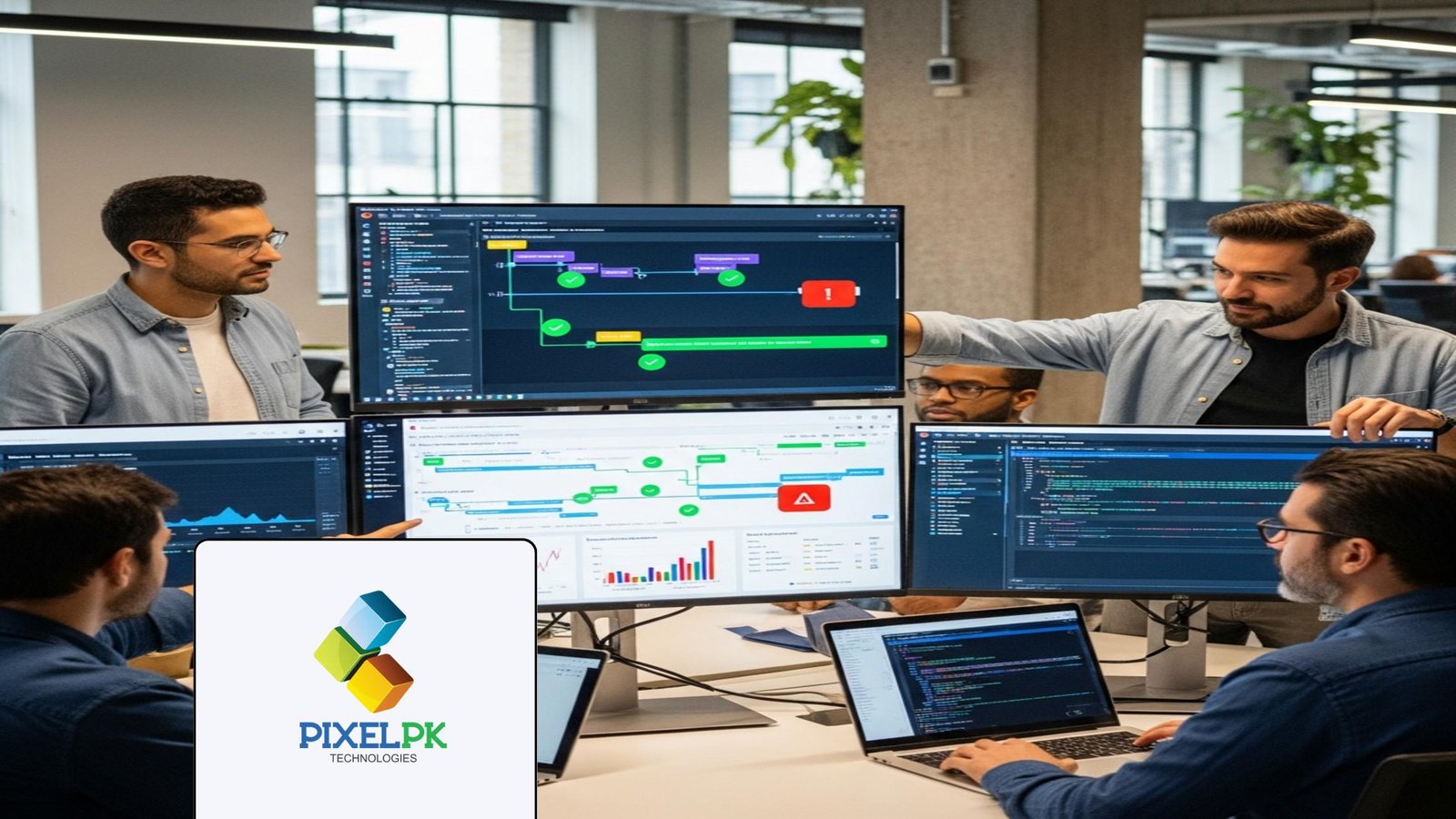
Create robust systems for monitoring model performance, data drift, and infrastructure health. Implement centralized logging for easy debugging and auditing. Visibility is key for reliable AI operations.
- Track model predictions and actual outcomes.
- Monitor data input distributions for changes.
- Collect logs from all components of the ML pipeline.
Standardize Model Deployment
Define a standardized process for deploying models to production environments. Utilize containerization (e.g., Docker) and orchestration (e.g., Kubernetes) for consistent deployments. This ensures portability and scalability.
- Package models as container images.
- Automate deployment using CI/CD pipelines.
- Implement A/B testing or canary deployments.
Phase 3: Scaling and Optimization (Days 61-90)
The final phase focuses on refining, scaling, and optimizing the MLOps pipeline. This ensures long-term sustainability and maximum value from your AI initiatives. Continuous improvement is the goal for your MLOps Business.
Performance Monitoring and Alerting
Refine monitoring dashboards to provide real-time insights into model and system performance. Configure automated alerts for anomalies or performance degradation. This enables proactive issue resolution.
- Customize dashboards with key metrics.
- Set up thresholds for alerting.
- Integrate alerts with incident management systems.
Automated Retraining and Redeployment
Implement automated pipelines for model retraining based on performance metrics or new data availability. Ensure smooth, automated redeployment of updated models. This maintains model relevance and accuracy.
- Trigger retraining based on data drift or performance drop.
- Automate the entire retraining and evaluation cycle.
- Seamlessly swap old models with new, improved versions.
Governance and Compliance
Establish clear governance policies for model development, deployment, and data usage. Ensure compliance with relevant industry regulations and ethical guidelines. Transparency and accountability are paramount for any MLOps Business.
- Document model lineage and decisions.
- Implement access controls and audit trails.
- Adhere to data privacy regulations like GDPR or CCPA.
Key Technologies and Best Practices for MLOps Business
Choosing the right tools and adopting effective practices are crucial. They ensure the success and sustainability of your MLOps initiatives. Modern platforms offer extensive capabilities.
Essential Tools and Platforms
A range of tools supports various stages of the MLOps lifecycle. Cloud providers offer integrated MLOps services. Consider open-source solutions for flexibility.
- Data Versioning: DVC, MLflow Data.
- Experiment Tracking: MLflow, Weights & Biases.
- CI/CD: Jenkins, GitLab CI, GitHub Actions.
- Orchestration: Kubernetes, Apache Airflow.
- Monitoring: Prometheus, Grafana, Evidently AI.
These tools facilitate automation and better control. For instance, platforms like Google Cloud AI Platform or AWS SageMaker provide end-to-end MLOps capabilities, as detailed in Google Cloud’s MLOps guide.
Embracing Automation and Reproducibility
Automation minimizes manual intervention and speeds up processes. Reproducibility ensures consistent results from your models. These are foundational pillars of effective MLOps.
- Automate repetitive tasks like data validation and model testing.
- Version control all aspects: code, data, environments, and models.
- Document every step of the ML pipeline for auditing.
Frequently Asked Questions
How quickly can we see ROI from MLOps?
Many businesses report seeing initial ROI within 3 to 6 months. This often comes from reduced operational costs and faster deployment cycles. Full optimization yields even greater returns over time.
What team roles are essential for MLOps?
Key roles include ML Engineers, Data Scientists, DevOps Engineers, and Data Engineers. A dedicated MLOps lead is also beneficial. Cross-functional collaboration is vital for success.
Can MLOps integrate with existing data infrastructure?
Yes, MLOps frameworks are designed for flexibility. They can integrate with most existing data lakes, warehouses, and processing tools. This minimizes disruption to current operations.
What are common challenges in MLOps adoption?
Challenges include organizational change resistance, skill gaps, and tool sprawl. Overcoming these requires clear strategy, training, and a focus on incremental adoption. Strong leadership also helps.
Conclusion
Adopting an MLOps Business strategy is no longer optional for companies leveraging AI. It is a critical enabler for scaling AI initiatives and realizing their full potential. The 90-day roadmap provides a structured approach.
This systematic approach ensures your AI models are not just developed but are also reliably deployed, continuously monitored, and efficiently scaled. It transforms AI from a research project into a core business asset. Pixelpk Technologies specializes in implementing robust MLOps solutions tailored to your unique needs.
If you are ready to accelerate your AI journey and achieve measurable ROI, consider partnering with experts. Our team delivers agile, scalable solutions to drive your digital transformation. Pixelpk Technologies helps you build a future-ready AI infrastructure. Additionally, explore our mobile app development services for broader digital solutions.